Nestlé is one of the largest food and beverage companies in the world. Headquartered in Switzerland and listed on the Swiss Stock Exchange, it operates across hundreds of markets, including Australia.
Nestlé Australia reports under the National Greenhouse Gas Reporting System (NGRS) and because of its size, is among the first companies required to report under Australia’s new climate disclosure requirements.
For Amanda Robertson, who heads up Nestlé Australia’s Sustainability function, being one of the first companies to report has offered an exciting challenge: reporting locally in a business that has a global supply chain, systems and targets.
We sat down with Amanda to talk about the opportunity this challenge presented to Nestlé Australia, and how AASB S2 reporting intersects with its broader sustainability ambitions.
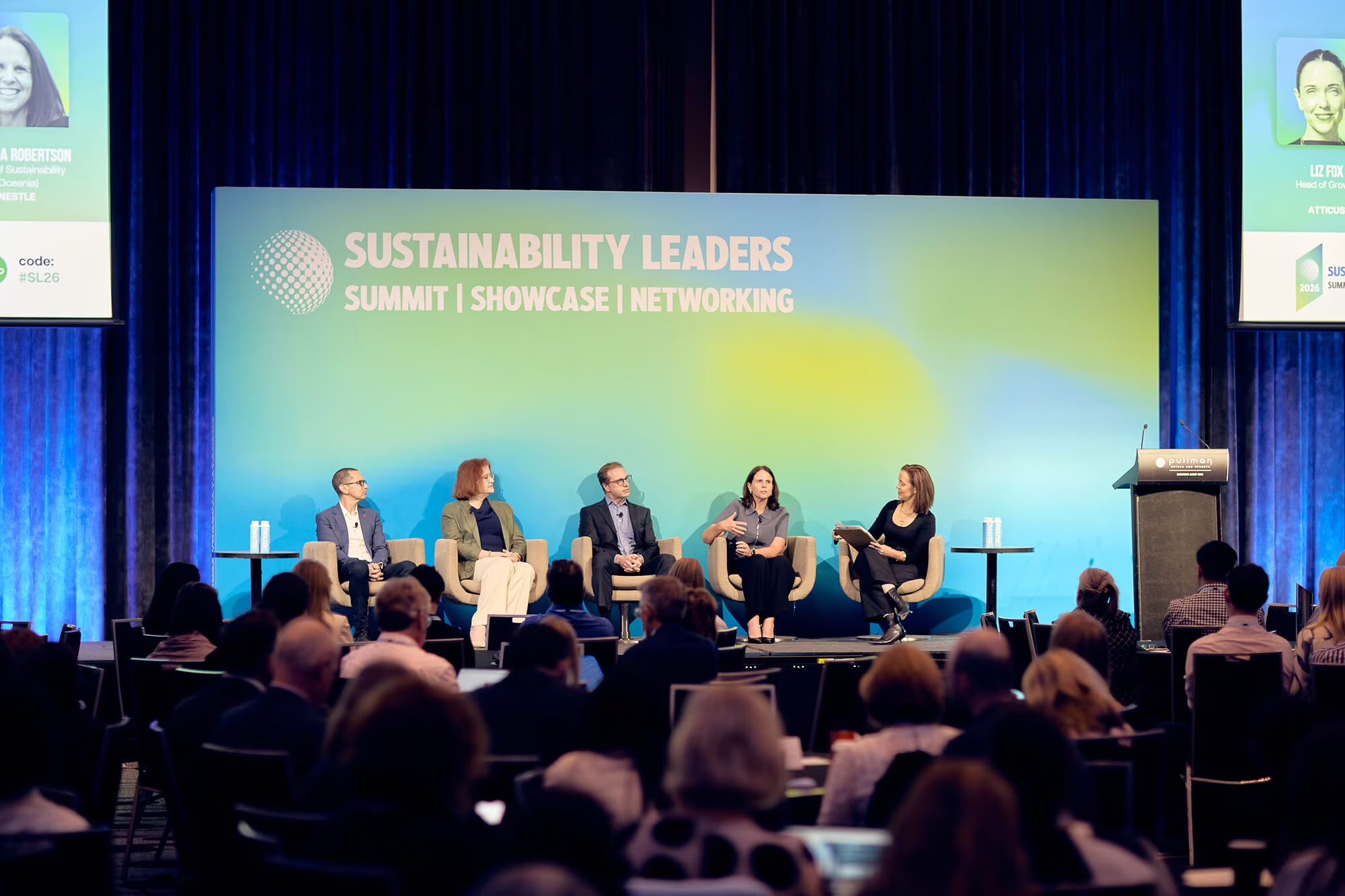
Amanda joins us on stage at the Sustainability Leaders Summit alongside sustainability leaders from Virgin Australia, Australia Post, and Frasers Property. This interview is a companion piece to that panel discussion.
Nestlé is a genuinely global business. What does sustainability look like from an Australian perspective?
At a global and local level, Nestlé focuses on three core sustainability priorities: climate action, regenerative agriculture, and circularity. In Australia, our role is to contribute meaningfully to these global ambitions through targeted, practical action.
Nestlé’s global climate goal is to halve greenhouse gas (GHG) emissions by 2030 and achieve net zero by 2050. In 2025, Nestlé globally achieved an important milestone, a 24.5% reduction in net GHG emissions compared to our 2018 baseline. In Australia we supported this progress through key initiatives such as sourcing 100% renewable electricity through a Power Purchase Agreement, moving to hybrid vehicles across our fleet and reducing the use of virgin plastic in our packaging.
Regenerative agriculture is critical to building a resilient supply chain. In Australia, we are supporting the adoption and expansion of regenerative agriculture practices on selected farms in the NSW Riverina. The farmers in our pilot program are implementing and exploring practices such as inter-cropping, biodiverse crop rotations, and precision agriculture methodologies. These approaches will be essential to safeguarding the future of our key ingredients and reducing our environmental footprint.
Our circularity work spans packaging, factory waste, and food waste. Locally, we continue to lead through initiatives such as the national Nespresso capsule recycling program, our partnership with Oz Harvest, and advocating for the establishment of an industry-led product stewardship scheme for soft plastics to support recovery and recycling.
We know this is a marathon, not a sprint, and there are many uncertainties. In Australia, we remain focused on making steady, credible progress while supporting the broader transformation required across the value chain.
Australia is a small market in the context of a company like Nestlé. Does that limit your impact on the global sustainability agenda?
We like to think we can occasionally “punch above our weight” in Australia. Take coffee for instance. In Australia we have a well-established coffee culture that is often leading not following other markets. This means our expertise and input into the global coffee conversation is more significant than you would expect for a market our size. The same can be said of some of our circularity initiatives.
AASB S2 is new territory for most Australian businesses. How did Nestlé approach it?
While AASB S2 is new for many Australian businesses, at Nestlé we were not starting from scratch. Nestlé has deep climate and reporting expertise across the business, supported by a clear global Net Zero Roadmap, local targets, and established governance. As a company listed on the Swiss Stock Exchange, robust sustainability reporting is already part of how we operate.
The opportunity for the Australian team was applying that global expertise to a new local reporting framework. Our climate reporting team worked closely with Nestlé Australia senior management, global colleagues and locally with KPMG to develop our first report. Our approach has been practical and proactive, focused on what we can deliver now, while building skills and systems to strengthen local capability.
What’s been the biggest challenge?
There are many uncertainties and assumptions in this space. One of the main challenges has been translating risks and opportunities associated with a global supply chain into the Australian context. Understanding what those risks mean locally has involved considerable cross-functional discussion.
How do you lead a team through that kind of uncertainty?
For me, leading a cross-functional team across the business through uncertainty has taught three valuable lessons.
The first has been clarity – being very deliberate to communicate what is required now, what comes later, and sequencing the work so everyone can stay focused rather than overwhelmed.
The second has been building capability through hands-on experience. Much of the learning has happened by doing the work, which has helped everyone grow in confidence, and understand what is required.
And lastly, maintaining momentum on the programs that will deliver change. Reporting is important, but it cannot come at the expense of the actions already underway. Keeping that balance has been critical.
Any advice for others going through the same process?
I definitely do not have all the answers.
My advice would be to start early, engage with senior leaders to ensure the right level of focus, build a cross-functional team and approach it with a learning mindset.