
Every year, Phronesis studies the financial impact of reputation incidents on listed companies.
It looks at a wide spectrum of incidents, from disclosure and governance failures to product recalls and executive scandals, tracking what these incidents cost a company over the following year.
About half of the companies that go through one of these moments are still trading below where they started a year later. And many of them never fully recover.
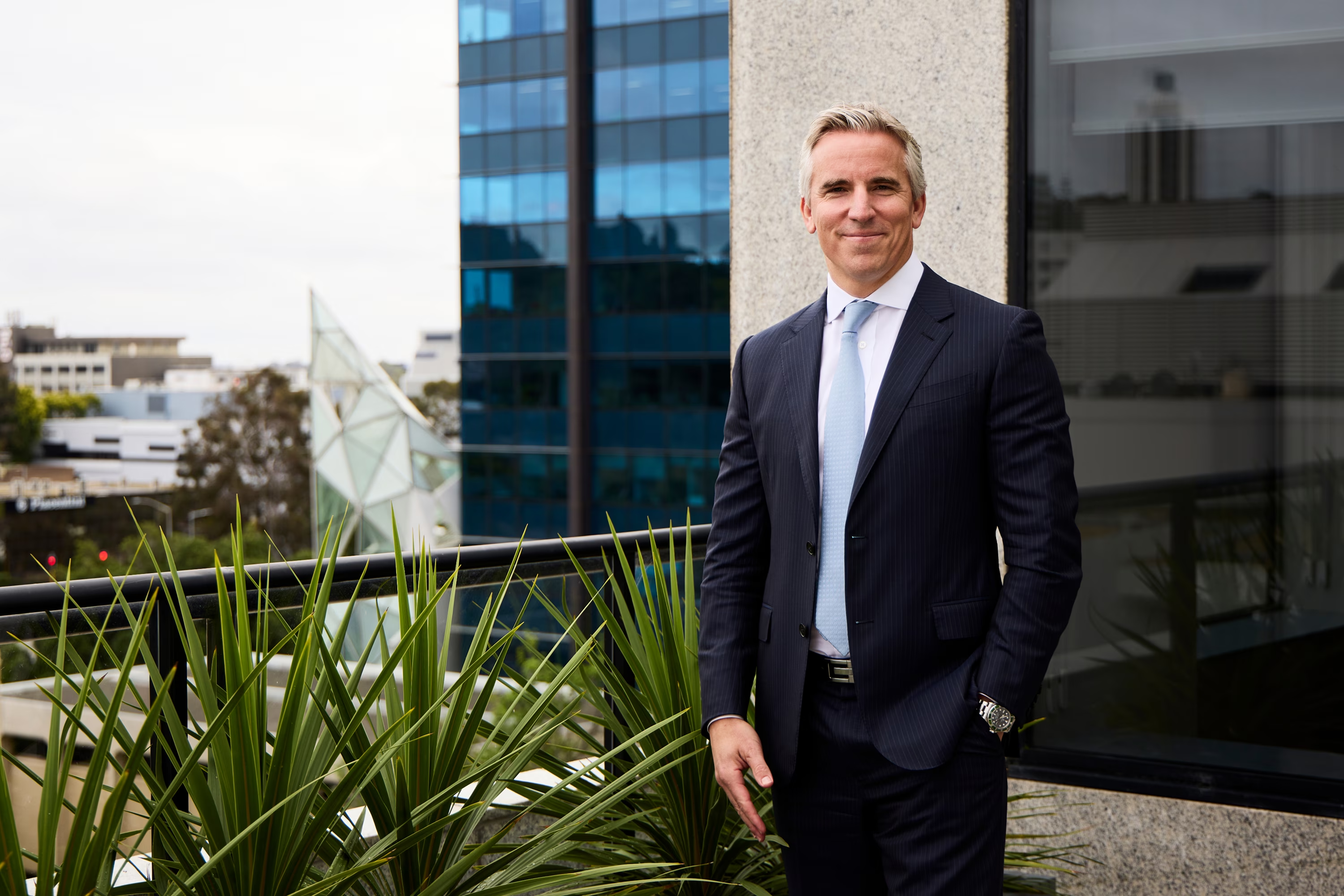
Shane Allison, founder and CEO at Phronesis, has spent his career advising major companies through high-stakes moments, including restructurings, mergers, government inquiries, and data breaches, and is a former chair of Communication and Public Relations Australia.
We sat down with Shane to understand what’s behind reputation incidents, how they drive share price movements, and where disclosure fits in.
What do you mean by a reputation incident?
People tend to think of the common incidents companies face – the big criminal events like cybercrime, executive misconduct, litigation, or product failure.
But some of the more common incidents are less obvious ones like regulatory enforcement and governance failure, which are the two areas that have been rising most in recent years.

Why put a dollar figure on reputation in the first place?
Because reputation has a real cost and a real impact on a company's value. My most frequent piece of advice to clients is a simple trade-off: would you rather pay a million dollars now, or see a negative story about you on the front page of the paper? Every client says the million dollars.
We measure it through the listed market, tracking every member of the ASX 200 relative to the index and its sector, because share price is the most reliable, real-time indicator of the cost of a crisis. Brand tracking and surveys lag behind and are hard to pin to a single incident. The market, on the other hand, is discounting that damage in minutes, hours, and days, even when there's no immediate financial hit to point to.
When that incident happens, you might not be able to sell your goods and services, and you might not be able to attract and retain employees. That sort of cost is factored by the market in minutes.
What types of incidents drive the biggest share price movements?
Some of the biggest share price movements come from shareholder class actions, an 18% drop, and from ATO enforcement, a 20% drop.
We think ATO enforcement is more well understood by the market because everyone submits a tax return, whereas consumer class actions and ACCC actions have a much smaller impact, because they're less well understood, more complicated, and the impact is less immediate.
Where does disclosure risk fit into this framework?
Disclosure errors, particularly accounting misstatements, sit inside governance failure, which is one of the categories that moved the most year on year. The market is relying on the board and its governance mechanisms to be effective, and that's why it punishes a company so badly when governance fails.
Our recent Reputation and Capital Report shows that a year after a governance incident, 80% never sustainably recover that value.
Why does a governance failure matter so much more to the market than other incidents?
Governance is a form of control. Does the board have effective control over the organisation? When there's a failure at a high level of governance, the market reads that as an indicator of failures at other levels too.
When there's smoke, there's fire, and when there's fire, there's going to be multiple spot fires.
There's also been a change in mindset. We spent a long time focused on the E of ESG. Post-COVID, the focus has shifted to the G. Governance is where investors have the most access and engagement, so if you don't trust the chair to have control over the organisation, that's a real pressure point. The foundation of the market is investors having trust and confidence in a company's statements, and once you erode that trust, you erode the valuation.
When there’s smoke, there’s fire, and when there’s fire, there’s going to be multiple spot fires.


The market needs to trust the chair, but the chair needs to trust others to produce accurate disclosures. How does a board deal with that, do you think?
Well yes, under the ASX listing rules, the board is ultimately responsible for ensuring the market is kept up to date with its continuous disclosure obligations. A board can rely on others to do that work, it just needs oversight built in carefully, because when the market isn't kept accurately informed, investors link that straight back to the highest levels of governance and assume something is wrong with the company.
Understanding why an incident costs what it costs is one thing. Knowing what to do about it, before and after, is the other half of the report.
The foundation of the market is investors having trust and confidence in a company’s statements, and once you erode that trust, you erode the valuation.

Yes, let's talk about your most recent report: the 2026 Crisis Update of Reputation and Capital. In it you spend more time on the practical aftermath of an incident. What did you find in your most recent investigation?
We worked with Lonergan Research to understand the impact of a crisis on customers, not just share price. The number one driver of customer retention is transparency. If customers rate you as transparent, 69% will keep working with you; if you're not, you'll lose 82% of them.
Transparency has two components: what you say and how quickly you say it. Communicate within an hour and you'll only lose 8% of customers. Take more than four days and you'll lose a quarter. Don't communicate at all and you'll lose nearly half.
We saw Telstra do this well during its recent mobile outage. They communicated within hours, told people what they knew and didn't know, and got back to fixing the problem. That's the kind of responsiveness customers reward.
So companies need to respond well when something goes wrong. What can they do before that point?
The number one thing is to have a plan that works regardless of the incident. Years ago, crisis preparedness was about what you'd say if X happened. Now it's much more about checklists, steps and an effective underlying process for getting to the right answer.
But companies also need to confront what might go wrong in the first place. Nobody wants to plan for a defective product or an incorrect disclosure. We encourage people to identify those risks and address the underlying control failures before they become reputation incidents.


If reputation is the outcome, how should companies think about the controls underneath it?
If you don't want the reputation hit of a data breach, invest in a strong cybersecurity function. If you don't want the reputation hit of having to issue a correction to an announcement, invest in software like Atticus, because then you'll be putting accurate information to the market in the first place.
That's what risk professionals tend to get wrong. They think of reputation as the product of controls failing, which misses the power of using reputation as an input into setting up controls in the first place. Analyse the reputation risks your company faces first, then prioritise the operational, strategic and financial controls that address them.